
TYPE
TOPIC
March 27, 2026
Students in Professor Khalil (Haji) Dokhanchi’s Introduction to Comparative Politics course at the University of Wisconsin-Superior recently stepped beyond the traditional classroom to create an immersive learning experience centered on the global refugee crisis. In partnership with the American Red Cross, the class designed and hosted an interactive exhibit that invited campus visitors to explore the everyday challenges faced by displaced people around the world.
The exhibit transformed the Yellowjacket Union Great Room into a series of experiential stations aimed at fostering empathy and understanding of refugee life. One station displayed the limited food rations many refugee families rely on, while another invited participants to walk through a simulated “minefield” made of bubble wrap, illustrating the constant danger that can accompany displacement and migration. Additional stations addressed barriers refugees often face after arriving in a new country, such as navigating unfamiliar languages, limited access to social services, and the isolation that can result from a lack of community networks. Students designed these activities to highlight the complex logistical, emotional and cultural challenges refugees encounter as they rebuild their lives.
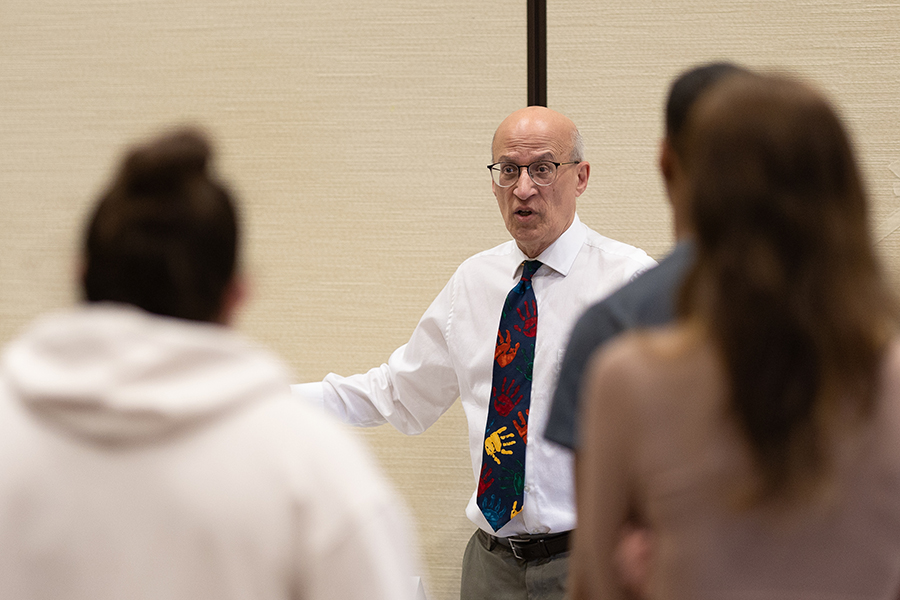
For Professor Dokhanchi, the project exemplifies experiential learning that connects academic inquiry with civic engagement.
“The idea is to elevate the conversation by providing students with information about the legal definition of a refugee, their rights, and how people become refugees,” Dokhanchi said. “There is no silver-bullet solution – attendees are encouraged to choose their own ways to help refugees.”
Sponsored by the American Red Cross, the exhibit reflects the course’s broader goal: helping students understand global humanitarian issues not only through reading and discussion, but through collaborative, public-facing work that extends beyond the classroom.