
TYPE
TOPIC
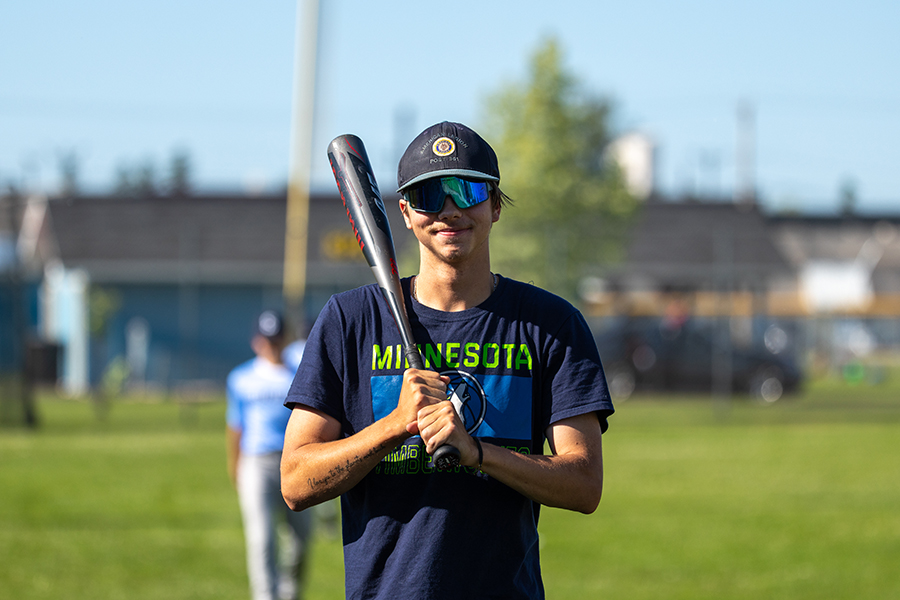
Balancing radio work, academics and volunteer coaching, Owen Petersen is shaping his future while supporting young athletes
For Owen Petersen, the path to the University of Wisconsin-Superior began with a practical decision: stay close to home, keep costs manageable and attend a college that felt familiar.
“I graduated from Barnum High School, about 45 minutes south of Duluth,” Petersen said. “UW-Superior is an affordable college that was close to home. It kind of hit all my numbers.”
As a first-generation college student, finances played a critical role in his choice.
“I don’t necessarily get a whole lot of help paying for school,” he said. “I take on a lot of that burden on my own, so UW-Superior was a great option for me.”
A College Experience that Delivers
That decision has paid off. Now a communications and media arts major with a concentration on multimedia journalism and a minor in sport and recreation management, Petersen sums up his experience simply: “It’s been perfect.”
He credits supportive faculty, strong academics and a close-knit campus community. One aspect, however, stands out most.
“Probably my favorite thing about UWS is the number of international students,” he said. “Coming from a rural small town, it’s really cool to meet people from around the world and learn about their culture.”
Turning Passion into a Career Path
Petersen’s academic path reflects a long-standing passion for sports — even though he knew early on he wouldn’t be playing professionally.
“Ever since I was about 12 years old, I realized I was probably not going to go to the NFL or the NBA,” he said. “So I decided it would be best to find a way to talk about it.”
That decision has already led to hands-on experience. Petersen works at WKLK radio in Cloquet, Minnesota, building broadcasting skills while still in school.
“I’m getting on-the-job experience right now — not just an internship,” he said.
By the time he graduates in spring 2028, Petersen expects to have three years of experience. He also has a job lined up with NSPN, a subscription-based sports network covering high school athletics in the Twin Cities suburbs.
“I will probably take that job and work on high school games,” he said. “Eventually work my way up and see how far I can go.”
Coaching Beyond the Scoreboard
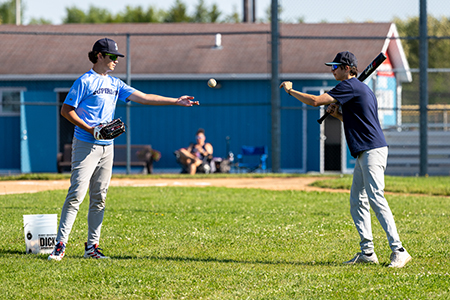
Outside the classroom and studio, Petersen is building another identity: coach.
What started as a casual interaction while working at a convenience store led to a volunteer role with a Superior youth baseball program.
“I saw a guy wearing a Superior youth organization polo,” Petersen said. “I said, ‘Hey, do any teams need a coach?’ He looked at me shocked because they needed coaching.”
The results haven’t yet shown up in the standings. His team went winless in its first season and is still searching for its first victory this year.
But for Petersen, the focus is not on wins and losses.
“I don’t care about winning,” he said. “I care about development.”
Building Skills — and Confidence
Petersen coaches players in their early teens who often have limited baseball experience, emphasizing fundamentals and confidence-building.
“They’re actually hitting the ball now,” he said. “We’re making plays. Pitchers are throwing strikes, so I’m pretty pleased with these boys.”
One of the biggest challenges is managing emotions, especially while coaching players only a few years younger than he is.
“I really try to keep it positive,” Petersen said. “The lowest points have been when they get down on themselves and start turning on each other.”
He stresses respect for teammates, coaches and the game while modeling composure.
Making an Impact Off the Field
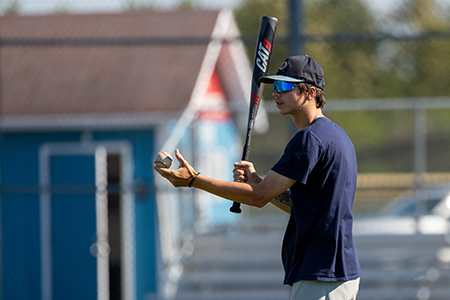
Petersen’s commitment extends beyond practices and games. He builds relationships with players’ families, offers rides when needed and makes sure no child is left behind.
“If a parent is running late, I wait,” he said. “I don’t want to leave them at the field.”
He also introduces his players to UW-Superior’s athletic community, connecting them with college coaches and athletes.
“It’s really valuable to have college coaches or players reinforce the same things I’m telling them,” he said.
Giving Back Through the Game
The time commitment — about six to eight hours each week — adds up alongside school and work. Still, Petersen says it’s worth every minute.
“I just coach to give back,” he said. “It’s fully volunteer work. I’ve never been paid a cent for it.”
That motivation comes from his own experience growing up.
“I was given some amazing coaching,” Petersen said. “I had some incredible mentors who shaped me into who I am today. I want to be that for someone else.”