
TYPE
TOPIC
University of Wisconsin-Superior students are addressing community mental and physical health issues through the Pruitt Center for Mindfulness and Well-Being Innovation Lab. The lab’s first project, LiveWell Rx, is a social and nature prescription program developed and administered by students in partnership with local healthcare providers. The pilot showed promising results, suggesting the approach may help reduce loneliness and improve well-being.
The Pruitt Center Well-Being Innovation Lab was launched in fall 2025 by Research and Innovation Lead Lynn Goerdt to give students hands-on experience identifying and tackling complex regional challenges to well-being. The initial areas of focus were limited local access to traditional mental health services and the need for additional forms of support. The response was LiveWell Rx.
LiveWell Rx builds on LiveWell, an initiative of the Pruitt Center, which creates opportunities for social connection through free activities led by university employees and community partners. Since launching in 2022, participation has grown from 179 attendees in 2023 to 1,780 in 2025.
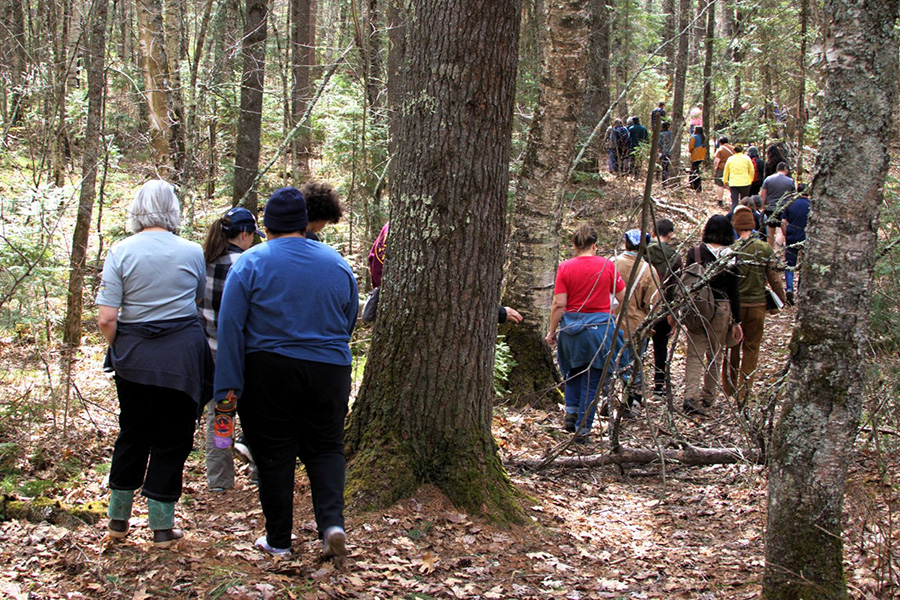
Social and nature prescribing connects individuals to supportive non-clinical activities that reduce loneliness and increase time spent outdoors. LiveWell provides an ideal setting for this intervention, because it offers free, welcoming and substance-free group activities, often involving movement and nature.
Students Develop LiveWell Rx
Over the fall 2025 semester, students in Health 470: Community & Environmental Public Health and Social Work 380: Social Work Research Methods worked within the Well-Being Innovation Lab to develop a plan to evaluate the program’s impact. After three months of research, discussion and planning, the assessment plan was ready to be implemented.
The LiveWell Rx pilot ran from February 2 through April 17, 2026, in partnership with UW-Superior Student Health and Counseling Services, Encouragement Clinic, Kintop Chiropractic and Imperium Chiropractic. These Superior healthcare providers identified and referred individuals who could benefit from the program.
Social work interns MacKenzie Johnston and Dan Maki helped implement the pilot by developing procedures, coordinating assessments, analyzing results and serving as connectors between providers and LiveWell Rx.
After receiving a referral, participants met with a connector to discuss their interests, health goals and available LiveWell offerings. Together, they selected three activities to complete as part of their prescription. Connectors followed up after the first activity to check in and provide encouragement.
Measuring the Impact
During the pilot, LiveWell Rx received 27 referrals. Thirteen of those referred completed their prescriptions and six completed both pre- and post-program assessments.
The most commonly reported concerns were anxiety, social isolation, mental health and loneliness. Participants hoped the program would help reduce stress, increase physical activity, encourage them to try new activities, interact more with others and increase time spent outdoors. Prescriptions included LiveWell cooking classes, beach sauna events, discussion groups and mindfulness programs.
Results showed meaningful improvements in participants’ health concerns. The average severity of participants’ primary concerns decreased from 4.2 to 1.83, while secondary concerns dropped from 3.4 to 2.33. Overall well-being scores also improved significantly.
Those who took part in the program reported that the activities helped them create connections and enhance their quality of life. Many highlighted the value of sharing experiences with others in a welcoming, drug and alcohol-free environment.
Measures of flourishing also improved across nearly every category, with the largest gains reported in meaning & purpose and character & virtue. Participants also showed growth in happiness & life satisfaction and mental & physical health.
Post-program interviews revealed that participants felt less alone in their challenges, reconnected with their creativity and gained a deeper appreciation for connection. One participant shared, “I am not alone. All these guys who look like they have it all together are actually dealing with stuff in their lives too.”
Another participant noted, “As a caregiver, it was great to socialize with other people. It was like the program was designed for us.”
Feedback from both participants and referral partners highlighted the importance of the connectors, who were described as kind, supportive and nonjudgmental. Activity hosts also played a key role in helping participants feel welcome and comfortable.
Overall, the pilot demonstrated that LiveWell Rx helped participants address health concerns and improve their well-being, with some reporting profound personal changes.
What’s Next
Based on the pilot’s positive outcomes and strong support from referral partners, LiveWell Rx will continue to its next phase. More referral partners will be added. It will also feature additional prescription options, including UW-Superior student programs, campus arts events and community activities that align with LiveWell’s criteria.
The Well-Being Innovation Lab will continue during the 2026–27 academic year, focusing on another major challenge to well-being: the impact of social media and artificial intelligence.