
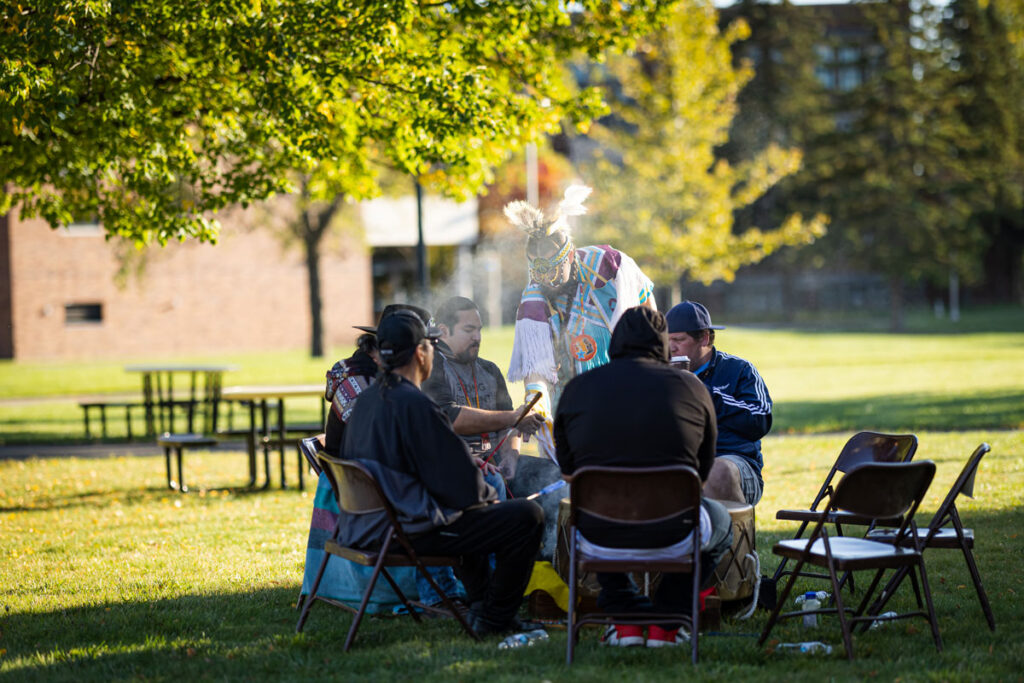
Smudging is a purification ceremony where any one or a combination of sacred medicines (some of which are listed below) are lit with a match or lighter. When lit, the burning medicines will produce smoke and a distinct scent is given off. The smoke is drawn over the individual(s) or area to release negative energy, create a positive mindset, and to ground or connect the individual to their teachings and culture. Smudging is always performed voluntarily and may be done in the context of ceremony or for teaching purposes. The smoke and scent produced during a smudge is minimal and often dissipates quickly.
The University of Wisconsin-Superior respectfully acknowledges we are located on Ojibwe land, whose history, language and culture continues to influence our vibrant community. UW-Superior supports and acknowledges Indigenous heritage and history, especially the Anishinaabe People of the Lake Superior region, and is currently working toward indigenizing many of its practices. UWS recognizes and appreciates that Indigenous students, staff, faculty, and community engage in a variety of traditional ceremonies and practices such as smudging. These practices are time-honored Indigenous traditions, passed on from generation to generation. UW-Superior recognizes and welcomes these practices on our campus.
Smudging Policy
UW-Superior recognizes the American Indian Religious Freedom Act of 1978. The university treats smudging and non-smoking ceremonial tobacco use as part of traditional life, well-being, and spiritual practice, and permits these medicines on campus when the required procedure is followed.
The policy covers Indigenous people broadly: registered and non-registered U.S. tribal communities, First Nations, Alaska Natives, Native Hawaiians and Pacific Islanders, and members of underrepresented Indigenous populations.